01 / On-site
Security guard services
A steady officer on site who knows your property and the people in it.
View details
Guide
How a Redwood City center or downtown block can handle walkways, parking and closing time.
Request a quoteCall (650) 376-8385
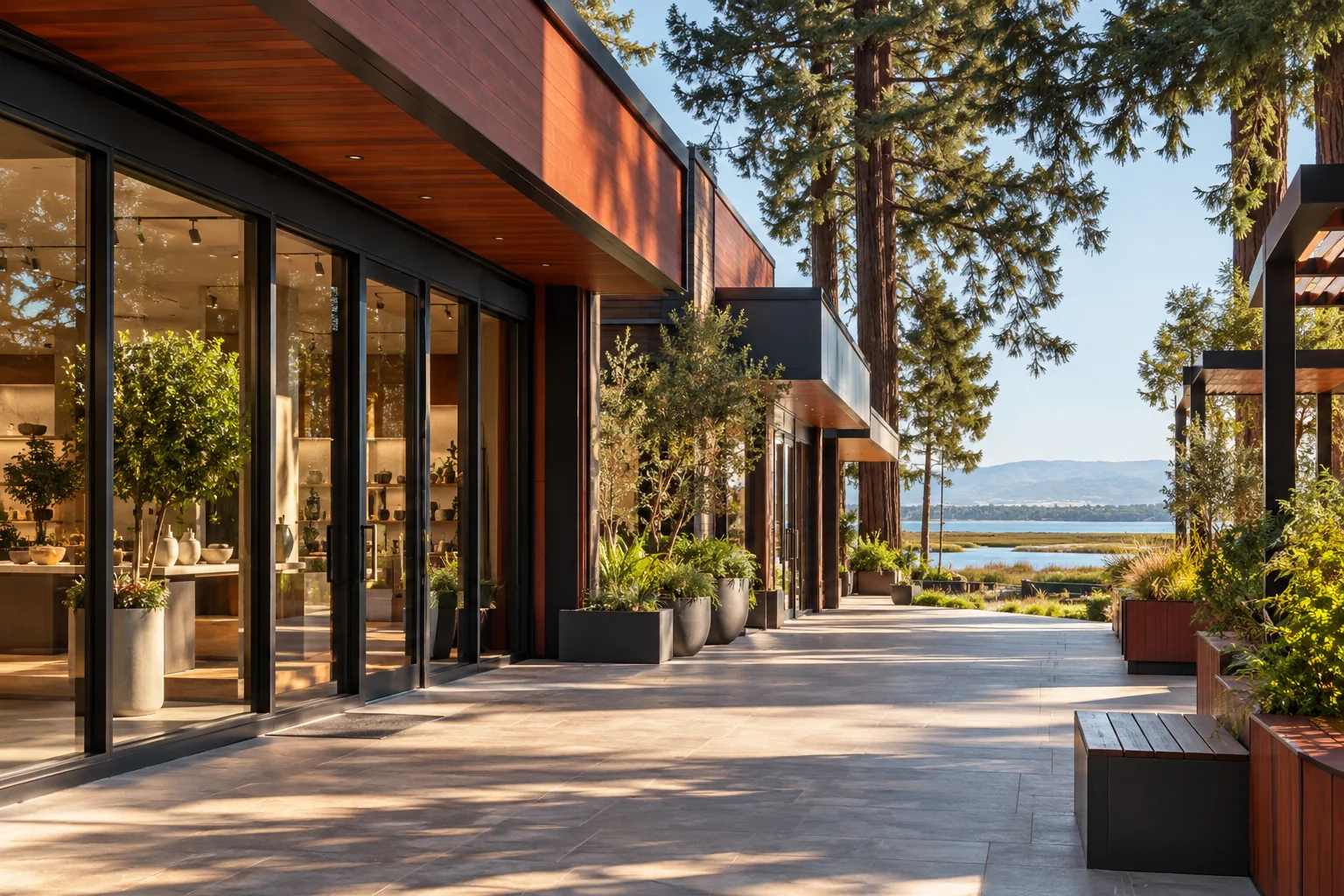
Each shop keeps an eye on its own door. Someone has to look after everything in between: walkways, seating, parking and the delivery areas behind the buildings. That’s where trouble tends to gather, because it’s nobody’s in particular.
A friendly officer walking the center makes a noticeable difference. They watch for shoplifting and loitering, help shoppers and give tenants one person to call.
Coverage usually belongs in the afternoon and evening.
The parking lot is where shoppers and staff feel most exposed, particularly in winter when it’s dark early. Regular walks, attention to lighting and an officer around as staff leave all help.
Overnight, patrol at varied times can check rear doors and delivery areas.
Give each tenant the officer’s hours and a number to call, and encourage them to report problems. Reports go to center management by email, building up a picture of anything that keeps recurring.
Busier shops mean busier problems. Centers can add hours from late November through the new year and then drop back, which month-to-month terms allow without any fuss.
Services
01 / On-site
A steady officer on site who knows your property and the people in it.
View details02 / Patrol
Marked patrol cars visiting overnight at times nobody can predict.
View detailsA good route takes the officer past every entrance, through each walkway, around the backs of the buildings and across the parking field, without falling into the same order each time. Mixing up the sequence keeps anyone watching from timing a gap. In a small strip center the loop is short and repeats often; in a larger center it’s split into sections, with a pass through the busiest areas in between.
Each completed loop goes into the timed log. When a tenant reports something at a certain hour, management can see where the officer was and shift the route to match.
Much of security comes down to what people can see. Overgrown hedges along a walkway, a dead lamp at the edge of the lot or pallets stacked behind the grocery store all create corners where nobody looks. Officers note these on their rounds, and the shift report turns into a running list for the maintenance team.
Small fixes like these cost little and make every other part of the plan work better, from officers on foot to cameras on poles.
Going over that list with your maintenance lead once a month keeps the small fixes from piling up.
Most centers have a few tenants who stay open well past the rest, often restaurants or gyms. Their staff walk out after the center has gone dark. Setting the officer’s hours around those closing times, rather than the center’s general hours, covers the people who are most exposed. After the last tenant leaves, patrol visits carry the property through to morning, and our retail security page covers downtown storefronts as well.
A few useful answers
A shared plan through center management covers the common areas no single tenant controls. A tenant who wants an officer inside its own store adds one on top.
Skim them each week for patterns: the same corner of the lot, the same hour, the same kind of problem. Those patterns are the clearest guide for adjusting the route, lighting or hours.
The officer greets them, checks whether they need help and lets management know when the same group keeps returning, with times in the report.
Yes. An opening check of doors, restrooms and the parking field goes at the start of the route, with the time logged.